 Daylytix
A good SEO proposal does one job: it convinces a prospect that you understand their problem and have a credible plan to fix it. The proposals that win aren’t the longest or the flashiest - they’re the ones grounded in the prospect’s actual site, with a clear scope and honest expectations. Here’s a template you can reuse, section by section.
The sections a winning proposal needs
- The problem. Show you understand where they are - findings from a quick audit of their site beat generic intros every time.
- The opportunity. What’s achievable, and roughly how big the upside is.
- Your approach. The specific work you’ll do, in phases, in plain language.
- Scope & deliverables. Exactly what’s included - and what isn’t.
- Timeline. What happens in month one, and what to expect by months three and six.
- Pricing. Clear, with the value framed against the opportunity.
- Why you. Short. Proof, not adjectives.
Lead with a real audit, not promises
The single biggest upgrade to any SEO proposal is opening with findings from the prospect’s own site. “You have 42 pages with missing meta descriptions, your Core Web Vitals fail on mobile, and three pages are competing for your main keyword” is far more persuasive than “we’ll improve your SEO.” It proves you’ve done the work and shifts the conversation from whether to when.
Tip: Run a quick audit of the prospect’s site before you write a word. Three concrete, specific findings in the opening paragraph say more than any amount of polished boilerplate.
A sample SEO proposal outline
Here is how the sections read in practice, for a made-up local bakery with an online shop. Swap in your prospect’s findings and numbers.
- The problem: “Your product pages are not indexed because of a noindex tag left over from the redesign, 18 pages have no meta description, and the mobile site loads in 4.8 seconds.”
- The opportunity: “You already appear for ‘sourdough delivery’ on page 2. Fixing indexing and speed puts your shop pages in a position to reach page 1.”
- Your approach: “Month 1: technical fixes. Month 2: product and category page optimisation. Month 3: local search and content.”
- Scope: “Included: fixes, on-page work for 20 pages, monthly report. Not included: paid ads, new site design.”
- Timeline: “First fixes live in two weeks; a re-audit at the end of month three shows what moved.”
- Pricing: one clear monthly fee, with what it covers.
- Why you: two short results from similar clients, with numbers.
Set honest expectations
Over-promising is the fastest way to lose a client. Be clear that SEO compounds over months rather than weeks, that the first wins are usually technical fixes and quick-win pages, and that competitive terms take longer. Never guarantee rankings: Google’s own advice on hiring an SEO says no one can guarantee a #1 ranking and tells site owners to be wary of anyone who does. Clients who understand the timeline stay; clients sold a fantasy leave.
Use an SEO proposal generator
Writing the problem section is the slow part, because it needs an audit. A proposal generator does both: it audits the site and turns the findings into a document you can send. In Daylytix, run an audit of the prospect’s site and click Proposal at the top of the results. You get a PDF with these sections:
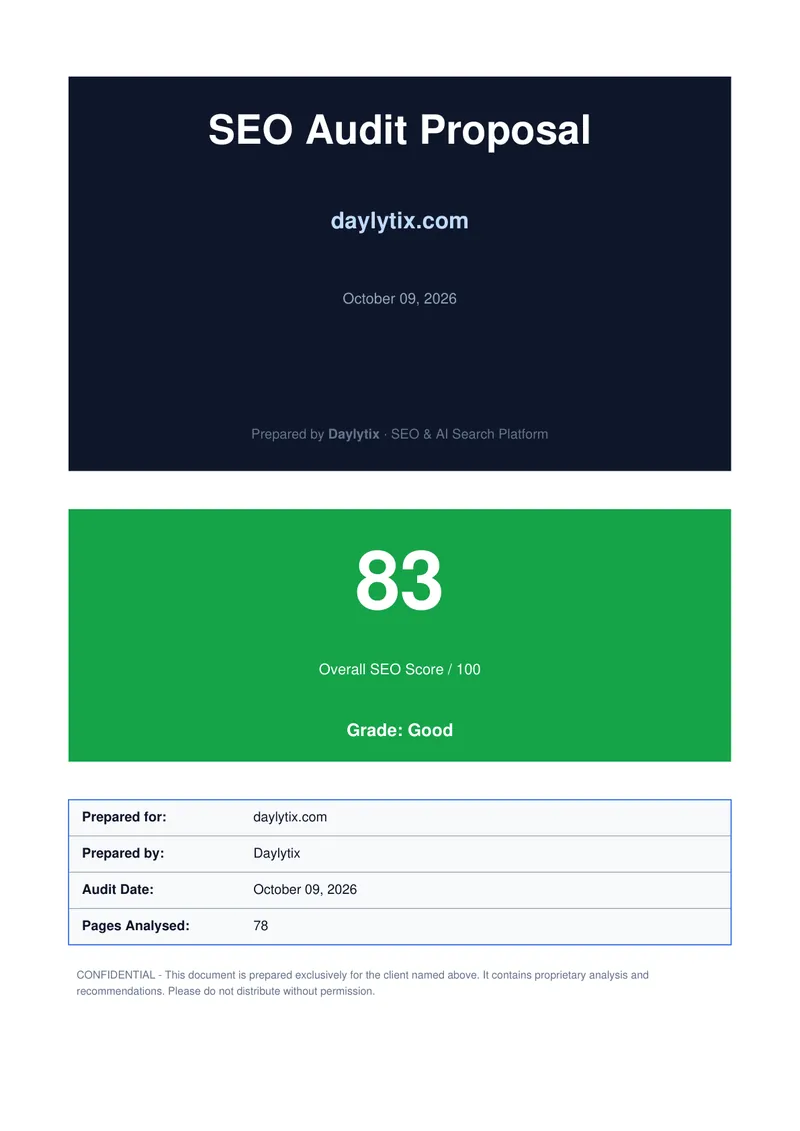
- Cover with the site, the date, your agency name and the overall score.
- What we found and Why this matters: the audit in plain language.
- Key findings: a table of the priority issues with severity and impact.
- How we can help and a Recommended roadmap in phases, from kick-off to a re-audit in week 8.
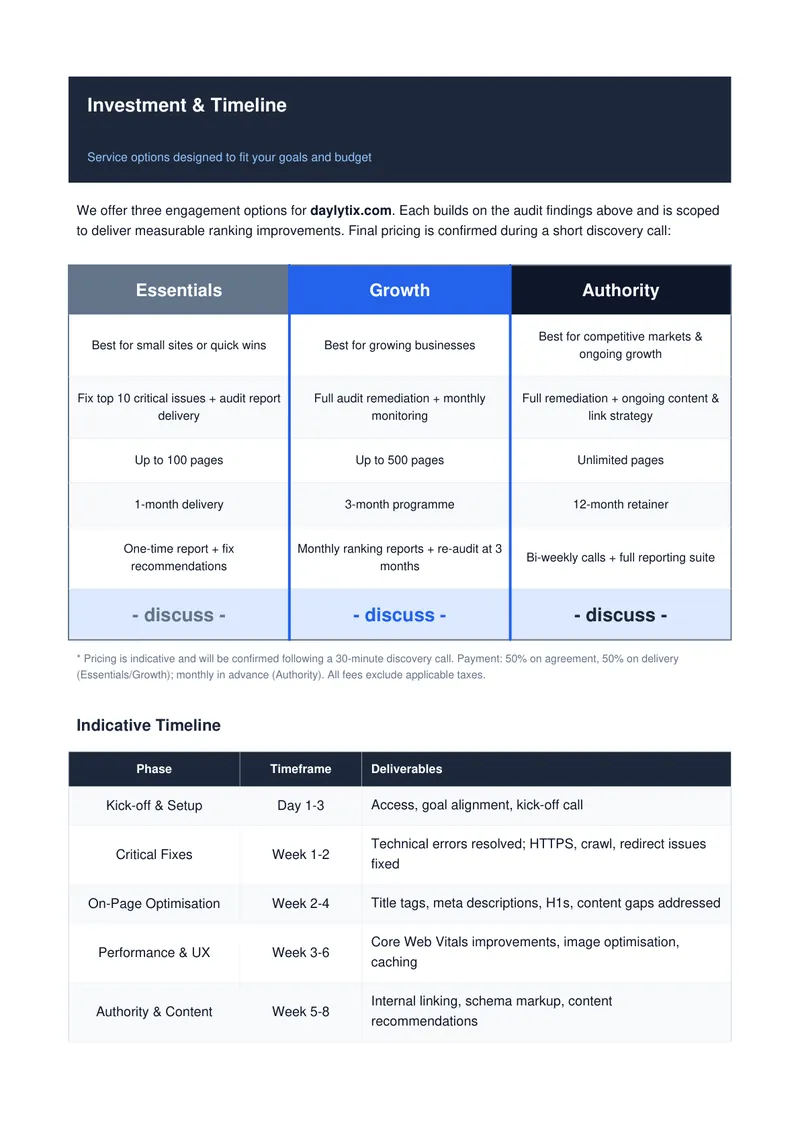
- Investment & timeline: three options (Essentials, Growth, Authority) with their scope; the price is left as “discuss” for you to agree with the client.
- Next steps.
The generator is part of every plan. The PDF’s wording is fixed, so if you want your own voice or prices in it, use it as the first draft and edit the text in your own document.
Make it look like you
A branded, professional proposal signals a professional service. Whether you build it in a doc or generate it from audit data, keep the formatting clean and consistent with your brand.
Once the client signs, the same audit data powers your monthly white-label reports - so the proof you used to win them keeps proving your value every month.
Frequently asked questions
What should an SEO proposal include?
The problem (backed by an audit), the opportunity, your phased approach, scope and deliverables, a timeline, clear pricing, and brief proof of why you’re the right fit.
How long should an SEO proposal be?
Long enough to be credible and no longer - usually two to five pages. Specificity beats length; open with real findings from their site.
How do I make an SEO proposal more persuasive?
Ground it in a real audit of the prospect’s site. Concrete, specific findings prove you’ve done the work and are far more convincing than generic promises.
Can I see a sample SEO proposal?
Yes: the outline above shows what each section says for a sample client, and the two pages above come from a real proposal PDF that Daylytix generated for daylytix.com.
Is there a free SEO proposal generator?
A template in Google Docs or Word is free, but you still need an audit to fill it in. Daylytix’s proposal generator is included in every plan and can be tried free for 7 days, no card needed.